It started small: a platform to handle invoices and offers for a few friends who run their own companies. They used it, asked for more, and so did I. Step by step my team grew it into an all-in-one workspace. Our 15 users open it every day, and so do the four of us who build it.
← All work
Side project · 15 users, 5 companies invoicing · 370+ commits since April 2026
Basta Crystal
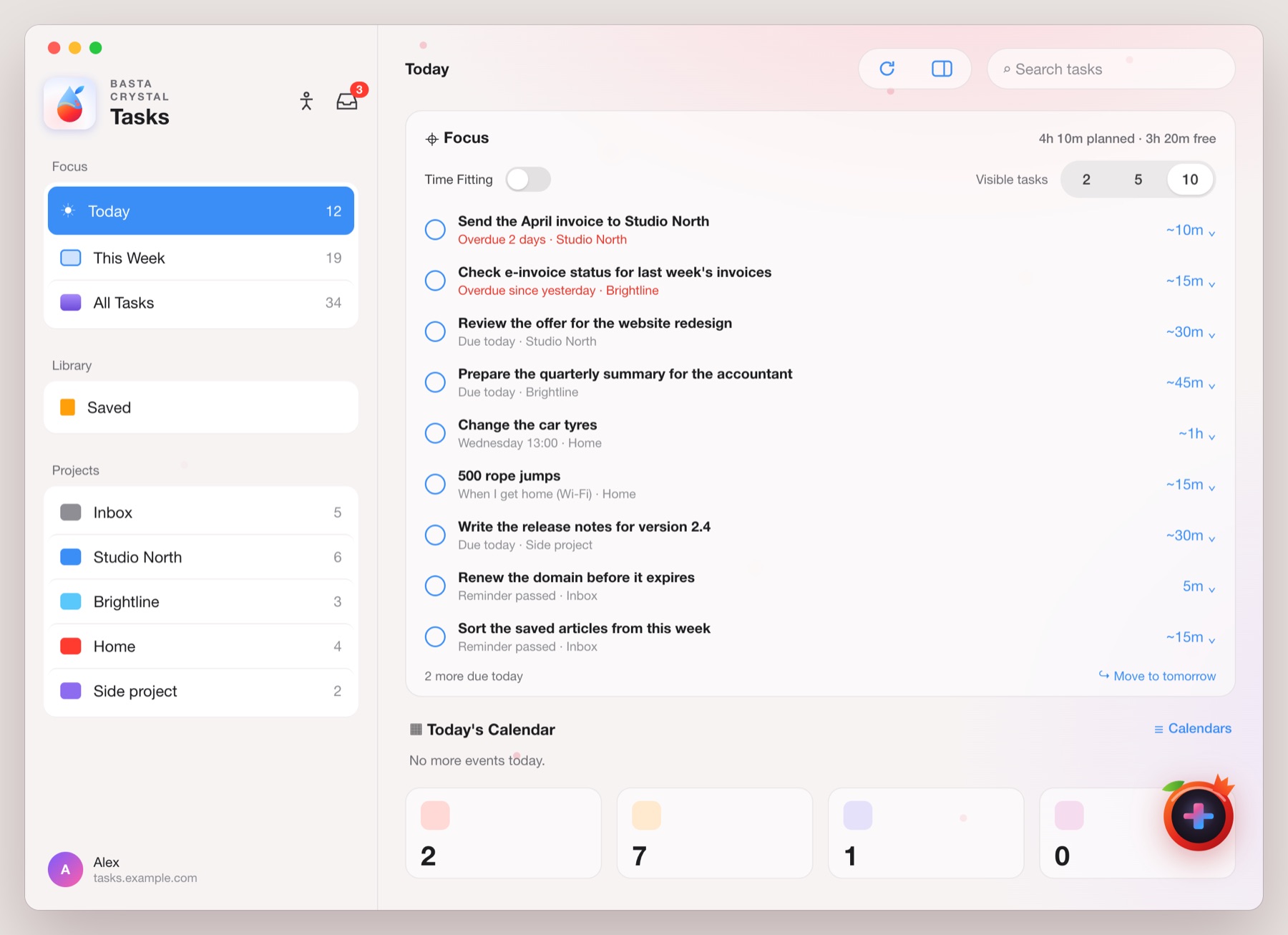
It started as an invoice and offer tool for a few friends' companies. My team grew it into an all-in-one workspace for business, tasks, saved pages and a daily practice, on web, iPhone, iPad and Mac. Our users open it every day.
- Role
- Lead. I set the direction and built the LLM features myself: voice task capture, AI-organized bookmarks and the assistant layer
- Team
- Four of us: me, my wife (a product designer) and two developer friends, plus coding agents under written rules. All four of us use it.
- When
- 2026 –
- Stack
- Next.js 16, React 19, TypeScript, Prisma 7 / Postgres, SwiftUI (iPhone, iPad, Mac), Chrome + Safari extensions, Claude API
Why we built it
What it does
- Business: invoices and offers for several small companies, exported as PDFs and synced with the Serbian national e-invoicing system, with clients and attachments.
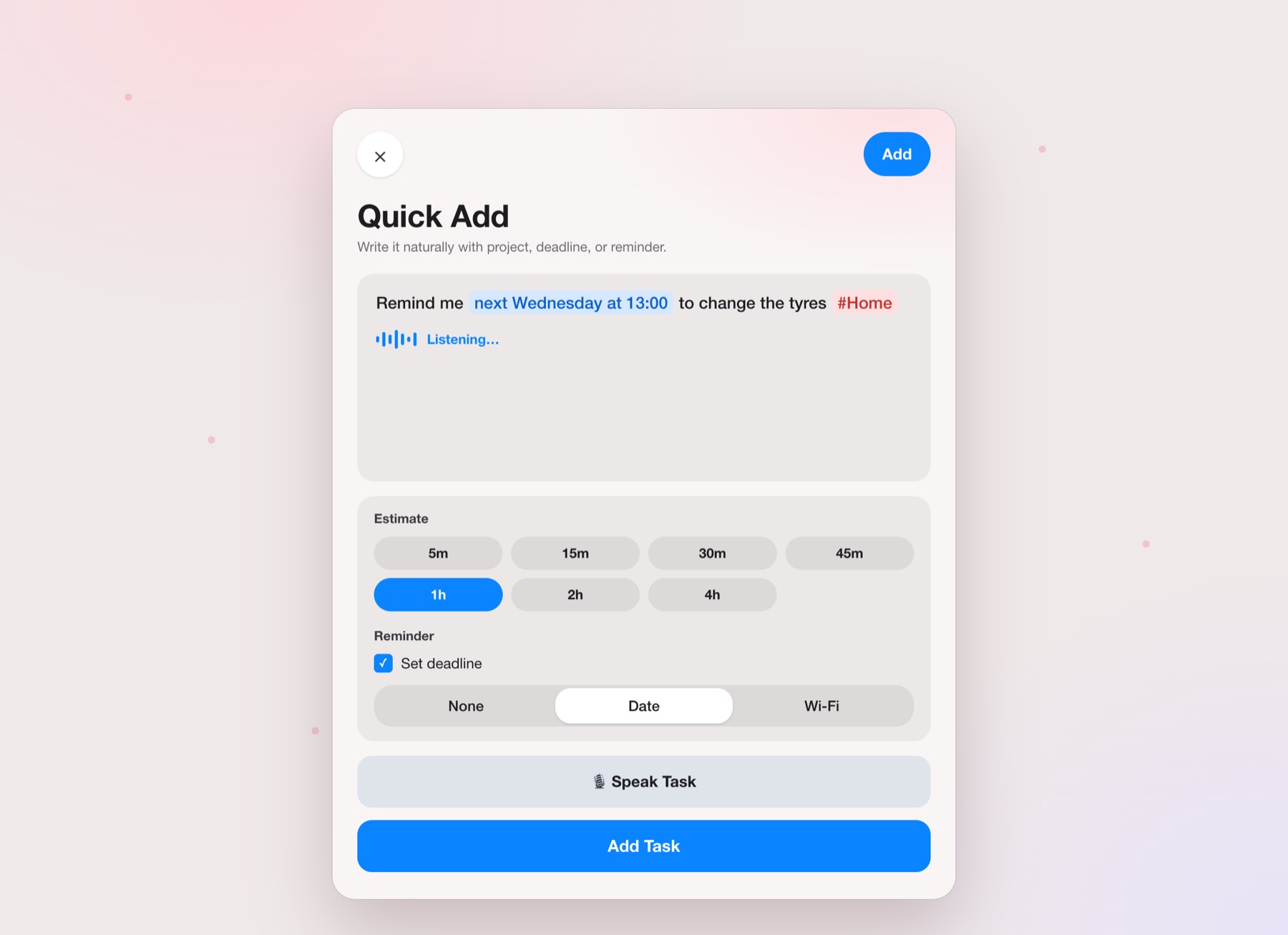
- Tasks by voice, in Serbian: ChatGPT is connected for Serbian speech-to-text, so I add tasks on the go: “Remind me next Wednesday at 13:00 to change the tyres.” Then tasks and projects on iPhone, iPad and Mac, with deadlines, reminders, Smart Focus scheduling and a morning digest.
- Reminders without tracking: “Remind me when I get home to do 500 rope jumps” fires when the phone joins my home Wi-Fi. No location tracking needed.
- Tab clutter: AI-based bookmarks. Pages saved from Chrome or Safari organize themselves into a library, so I can close the tabs.
- Knowledge: Gmail sync and search, and notes search.
- Staying fit: an almost random daily practice, so no two days are the same.
One product, many surfaces
Web, native iPhone, iPad and Mac apps with a Today widget and push notifications, and Chrome and Safari extensions, all on one API. Each user has a separate workspace and permissions.
Taking steps out
Most changes start because one of us notices a step we keep repeating, and we remove it.
A small audience, on purpose
Basta Crystal has 15 users so far, and 5 companies run their invoicing through it. I don't present it as growth evidence. It's where a small team practises the craft end to end: listening to users I can call by name, designing, building for web, iPhone, Mac and the browser, running it in production, and fixing whatever annoys someone the next morning. It's evidence of making things and caring about how they feel.
What I'd measure before opening it up
If I opened it to other small businesses that invoice in Serbia, I wouldn't start with features. I'd start with these questions:
- Activation: how long from sign-up to the first invoice accepted by the national e-invoicing system?
- Habit: do people come back weekly to issue, file or check invoices without a reminder?
- Retention: after month two, are they still filing every invoice through it, or only some?
- The honest test: would they be upset if it disappeared tomorrow?
The 5 companies already using it are the first test of these. The next step would be 5–10 small businesses I don't know, watching what they actually do, and only then deciding whether it should become a product.