Shooting decides modern basketball, yet only a minority of clubs have a shooting coach, and expert shooting coaches are rare. Kids also quit basketball at around age 11 on average, and the lack of coach time for individual work is one of the reasons. We wanted every kid who dreams of becoming a player to have expert shooting help, anywhere, with nothing but a smartphone.
← All work
Co-founded · AI shooting coach
SwishGuru / Ball Skiller
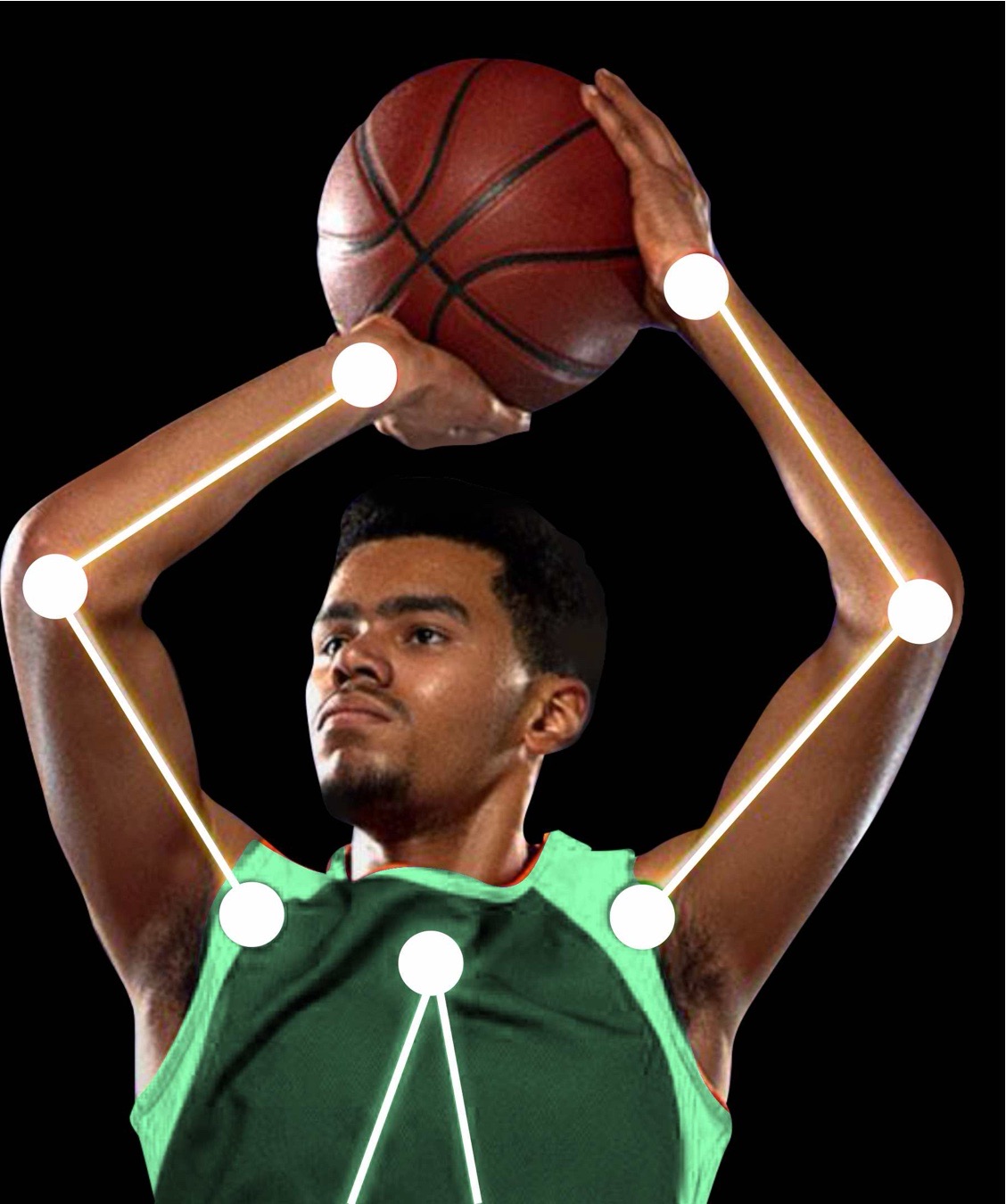
A personalized basketball shooting coach in your phone. Film your shot, and the app tracks your form in 73 points, detects mistakes and builds a training program around them. I co-founded it as CTO and built it with PeakNick's engineering team.
- Role
- Co-founder & CTO (Ball Skiller), Head of Engineering at PeakNick
- Team
- “Starting 5”: a pro shooting coach as CEO, engineers and a PhD mathematician on computer vision, a skills coach, inside PeakNick's 30-person engineering org
- When
- 2020 – 2025
- Stack
- Pose estimation (73 body keypoints), computer vision and deep learning on video, motion-capture 3D animation, iOS + Android
The challenge
My role
- Co-founded Ball Skiller as CTO, next to a professional development and shooting coach as CEO. I'm a former basketball player myself.
- Architected and delivered the product as part of PeakNick's in-house portfolio, with the computer-vision work led together with a PhD mathematician.
- Led the product roadmap and AI/ML integration, and kept them aligned with the business.
- Balanced proprietary R&D with client delivery and growing the organization.
How it works
- Three steps to a first analysis: download the app for free, film a video of your shot, upload it.
- Analysis: pose estimation tracks the shooting form in 73 body keypoints, then the app detects technique mistakes and rates the shot.
- Build: the app turns the mistakes into lessons, tests and a personalized improvement program.
- The 3D library: we recorded real shooting technique with motion-capture equipment on live players, turned it into 3D animations, and used them to show the correct form from every angle.
What we said no to
We said no to a lot: other sports, other basketball skills, and a social feed people kept asking for. The jump shot alone was hard enough to get right, and one thing done well kept people coming back more than five things done halfway.
Getting users to the first “wow”
The activation moment was the first analysis of your own shot: seeing your form drawn in dots and your mistakes named. Everything in onboarding was built to get there in those three steps.
The first version ran OpenPose on modest AWS resources, so after uploading a shot, a player waited about five minutes for the analysis. That's a long time to stare at a phone. We worked on it from two sides:
- Make it faster: we moved the pose model from CPU to GPU instances on AWS. The algorithm got close to 60% faster, and the wait dropped from about five minutes to under two.
- Make the wait worth it: while the shot was processing, the app showed basketball tips and fun facts, so waiting felt like part of the app instead of a loading screen.
Making money and keeping users
The early business plan was freemium:
- Free: an analysis of the 5 most common mistakes.
- Paid analysis tiers: the full set of detected mistakes and correction methods, then progress control analyses.
- Training: individual “shooting keys”, or a monthly subscription for a 3-month program.
We positioned it against HomeCourt, Noah Basketball and Fitivity. The gap we targeted was detecting mistakes, personalized improvement training and a 3D view of the correct technique, rather than generic drills.
The hardest technical problem
Making pose analysis fast enough on a startup's cloud budget. The first OpenPose version ran on CPU with limited AWS resources. Moving the model to GPU instances on AWS was the change that got a player from upload to analysis in under two minutes, without giving up the 73-keypoint detail.